Tips to Actually Enjoy the Indy 500
—with practical advice directly from IMS leadership.

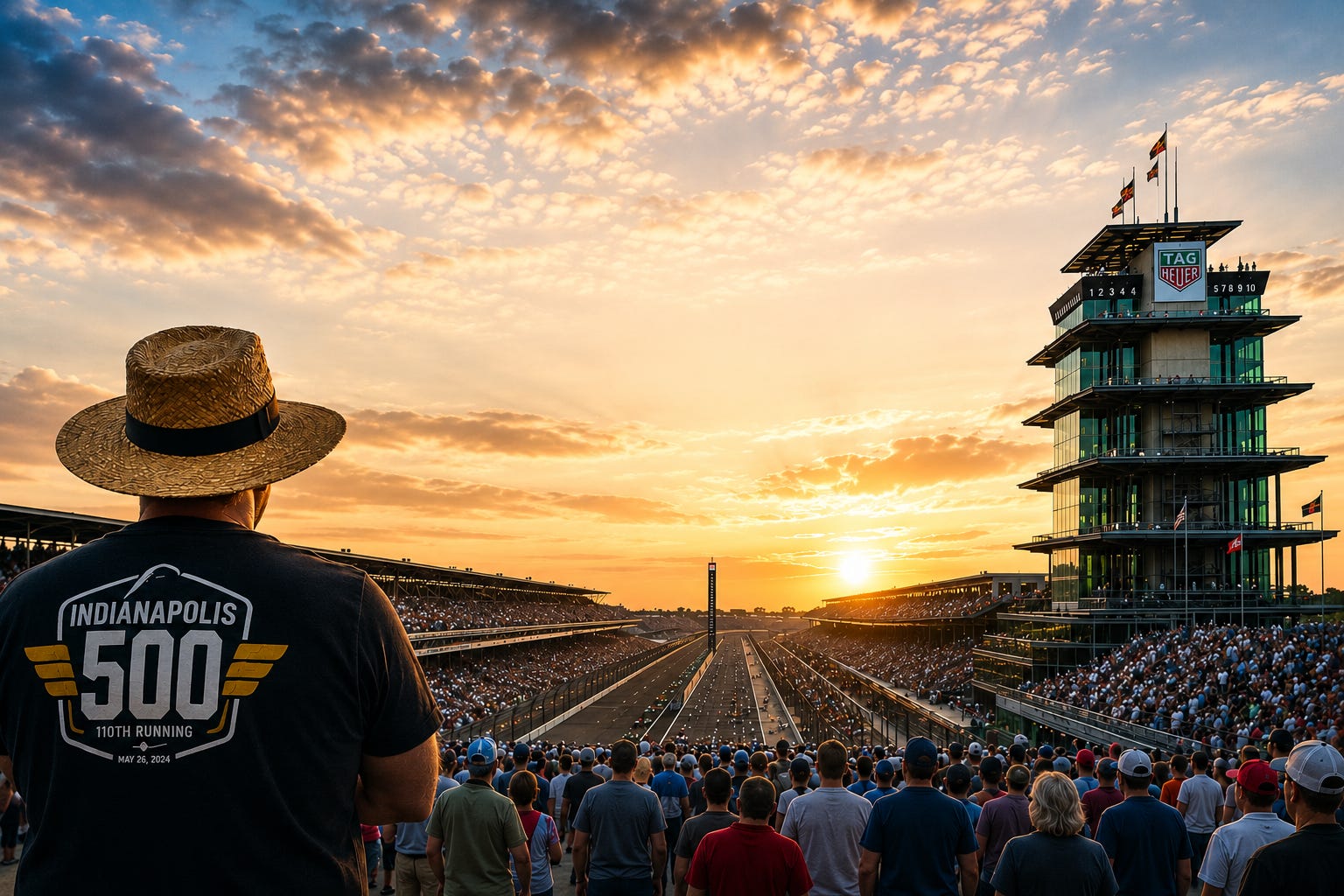
Ahead of the 110th Running of the Indianapolis 500, IMS President Doug Boles and Speedway safety officials hosted a media briefing to help prepare fans for race day. What stood out most wasn’t discussion about lap speeds or championship implications. It was how much emphasis they placed on preparation, patience, and understanding what makes the Indy 500 different from virtually every other sporting event in the world.
The recurring message throughout the briefing was simple:
Come with a plan.
That starts with arrival time.
The people who seem to enjoy the Indianapolis 500 the most are rarely the ones scrambling to get through the gates an hour before the green flag. IMS parking lots open at 5 a.m., the gates open at 6 a.m., and there is a reason experienced attendees arrive astonishingly early.
Because the race itself is only part of the experience.
The Indianapolis 500 slowly wakes up over the course of the morning. Georgetown Road fills with fans carrying coolers and folding chairs. The smell of grilled food and sunscreen hangs in the air. The midway begins to come alive. Music echoes across the property while crowds steadily build toward one of the greatest pre-race ceremonies in all of sports.
That ceremony matters.
“Back Home Again in Indiana,” the military tributes, the flyover, the command to start engines — these are not filler before the race. They are part of what makes Indianapolis feel larger than life. Boles himself admitted during the briefing that pre-race is actually his favorite part of the month of May.
The other major takeaway from the briefing was something that longtime Indy attendees already understand:
You cannot fight the scale of this event.
Roughly 350,000 people will attempt to enter and leave the Speedway on race day. No amount of planning eliminates that reality. What IMS leadership emphasized, however, is that understanding the scale changes your expectations, and ultimately your enjoyment of the day.
One of the most useful pieces of advice involved parking and post-race traffic.
Official IMS parking is already sold out, meaning many fans will rely on neighborhood parking west of the Speedway, a tradition that has become part of the event’s identity over generations. But Boles repeatedly stressed something many people misunderstand: parking closer to the track does not necessarily mean leaving faster. In many cases, the opposite is true.
After the race concludes, IMS intentionally slows vehicle movement in certain areas to prioritize pedestrian safety as enormous crowds exit the facility. If your car does not move immediately after the checkered flag, it is often by design, not dysfunction.
Rather than trying to sprint for the exits, Boles encouraged fans to slow down and embrace the moment. Bring water. Bring snacks. Sit at your car for a while and relive the race before attempting to leave.
That may actually be the most Indianapolis 500 advice imaginable.
The fans who tend to have the worst experience are often the ones treating the event like a football game, expecting to immediately jump in the car and drive home. The people who seem happiest are usually sitting in lawn chairs outside their cars an hour later, still talking about pit strategy, near misses, and who should have won.
There were also several genuinely useful practical reminders buried throughout the media briefing.
IMS is now fully cashless, something that still catches some fans by surprise – but there are reverse ATMs that will take cash and issue a card that can be used like a credit card anywhere inside or outside the facility.
The Speedway app has become increasingly valuable because it now shows real-time gate wait times that update every 30 seconds, allowing fans to avoid massive entry lines by simply walking a short distance to another gate.
Rideshare drop-offs will occur at 10th and Polco Street rather than directly at the Speedway gates.
Cooler rules remain in effect, and security screening has become significantly more streamlined thanks to newer open-gate scanning systems that allow most fans to walk directly through without removing items from pockets or bags.
One of the more interesting details from the briefing involved weather operations.
IMS safety officials explained that the Speedway operates with an extremely sophisticated weather monitoring system that includes National Weather Service personnel onsite inside race control. Fans may occasionally be asked to leave grandstands well before rain actually arrives, particularly if lightning enters a designated safety radius.
The briefing even included discussion of robotic “drone dogs” being added as another layer of event security this year — a strangely futuristic detail at an event that still feels wonderfully analog in so many ways.
The event is massive. It is imperfect. It is chaotic. It asks something from you as a fan.
But if you arrive prepared, allow extra time, embrace the traditions, and understand that patience is part of the experience, the Indianapolis 500 becomes something far greater than simply watching cars turn left for 500 miles.
It becomes one of the great sporting experiences in the world.