
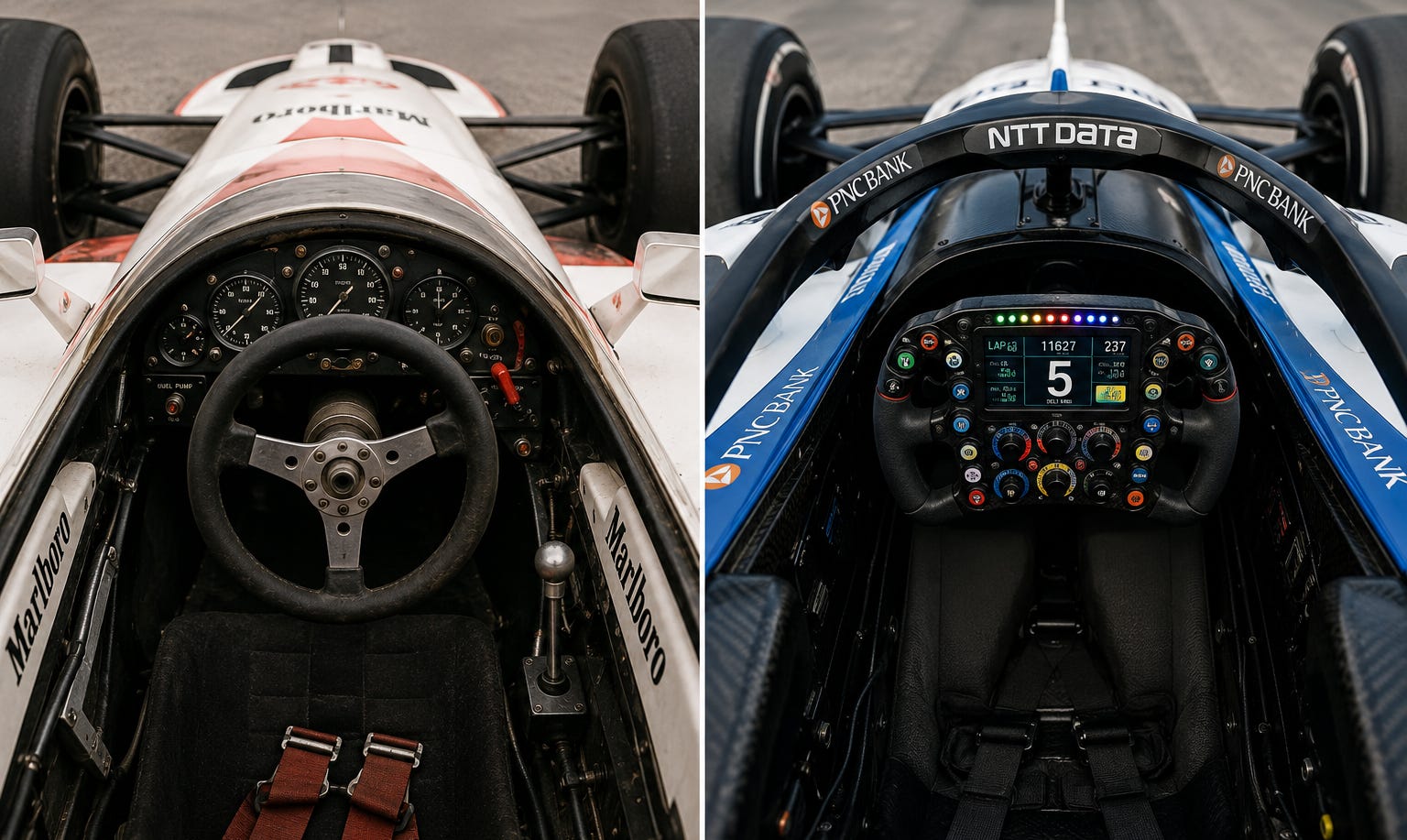
No power steering. No paddle shifters. No quiet layer of software correcting mistakes in the background. Just a steering wheel, a gearbox, and a throttle.
Every lap was a negotiation between speed and restraint. Between bravery and consequence. That was part of the appeal.
The Way It Used to Feel
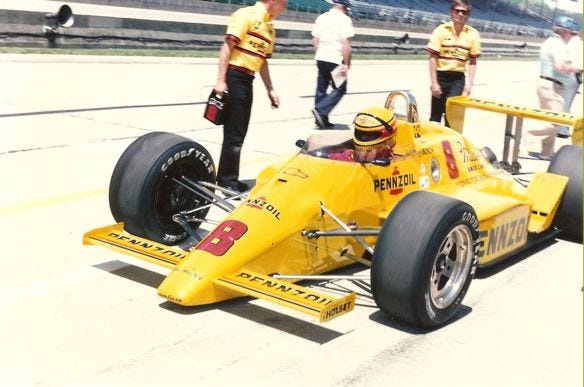
I grew up around IndyCar in the mid-late 1980s and the memories tend to come back the same way; loud, a little chaotic, and unmistakably alive. The cars were the most raw, beautiful pieces of machinery I had ever seen — and I still feel the same way today.
The cars moved. Constantly. They didn’t glide around the track in neat, predictable arcs. They twitched. They stepped out. They demanded constant corrections. You could see the hands at work—small adjustments, quick reactions, a rhythm between driver and machine that felt almost improvised.
Drivers like Rick Mears made it look smooth — but that smoothness was earned, not engineered.
The cockpit used to be a place of decisions. Now it’s a place of execution.
And then there was the engine.
Turbocharged power that arrived suddenly, aggressively, sometimes unpredictably. Drivers weren’t just managing grip and traffic; they were managing the car’s appetite for its own mechanical limits.
Adjusting boost mid-race wasn’t a gimmick. It was a decision with consequences.
Push it too far, and you might win — or you might not finish at all.
And Then Everything Changed
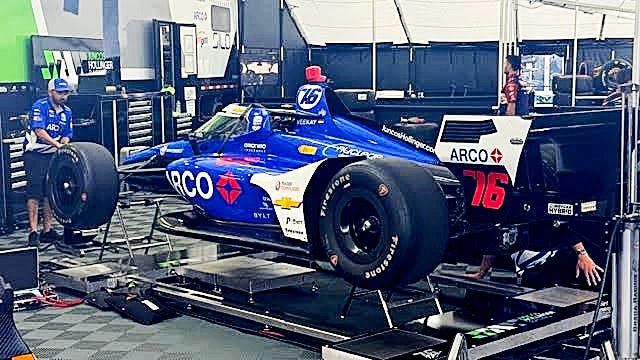
The Modern IndyCar, in many ways, is the opposite of that chaos.
The cars are still fast—unquestionably so—but they are also more stable, more predictable, more refined.
The steering wheel alone tells the story.
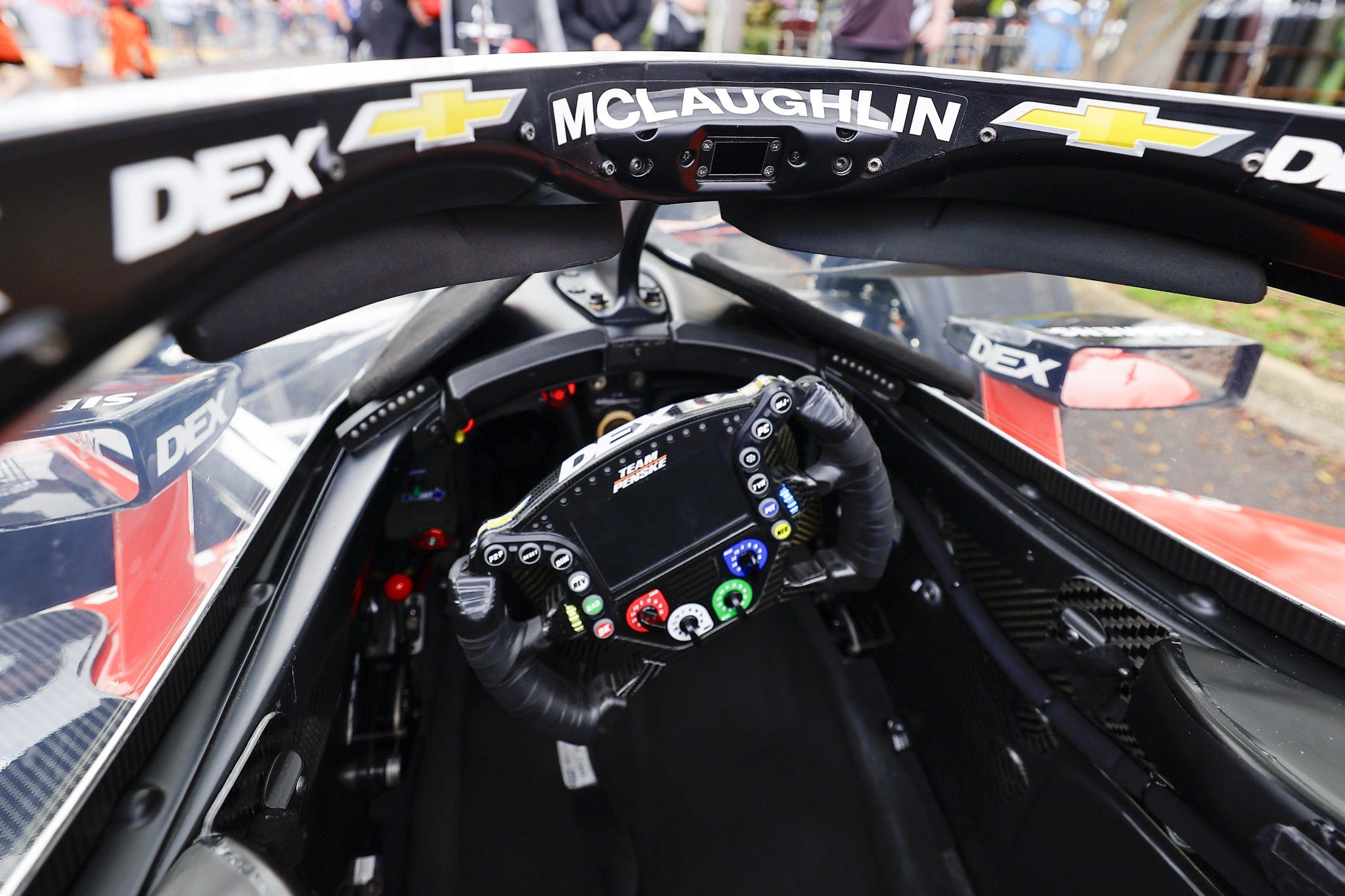
Where there was once simplicity, there is now complexity. Buttons. Displays. Data. Layers of information available at a glance.
And beyond the cockpit, there’s an entire ecosystem supporting the driver in real time. Engineers monitoring telemetry. Strategy unfolding corner by corner. Adjustments made not just by instinct, but by data.
The car is no longer just a machine.
It’s part of a system.
Safety Changed Everything
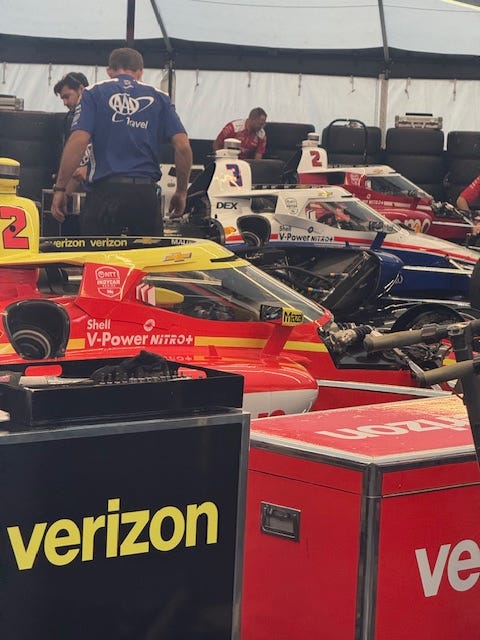
The introduction of the aeroscreen, improvements in chassis design, and a broader commitment to protecting drivers have changed the sport in ways that can’t be overstated.
Incidents that would have been catastrophic in earlier eras are now survivable.
That’s not a trade-off. That’s progress.
But it does change the feeling of the sport.
The Driver Then… and Now
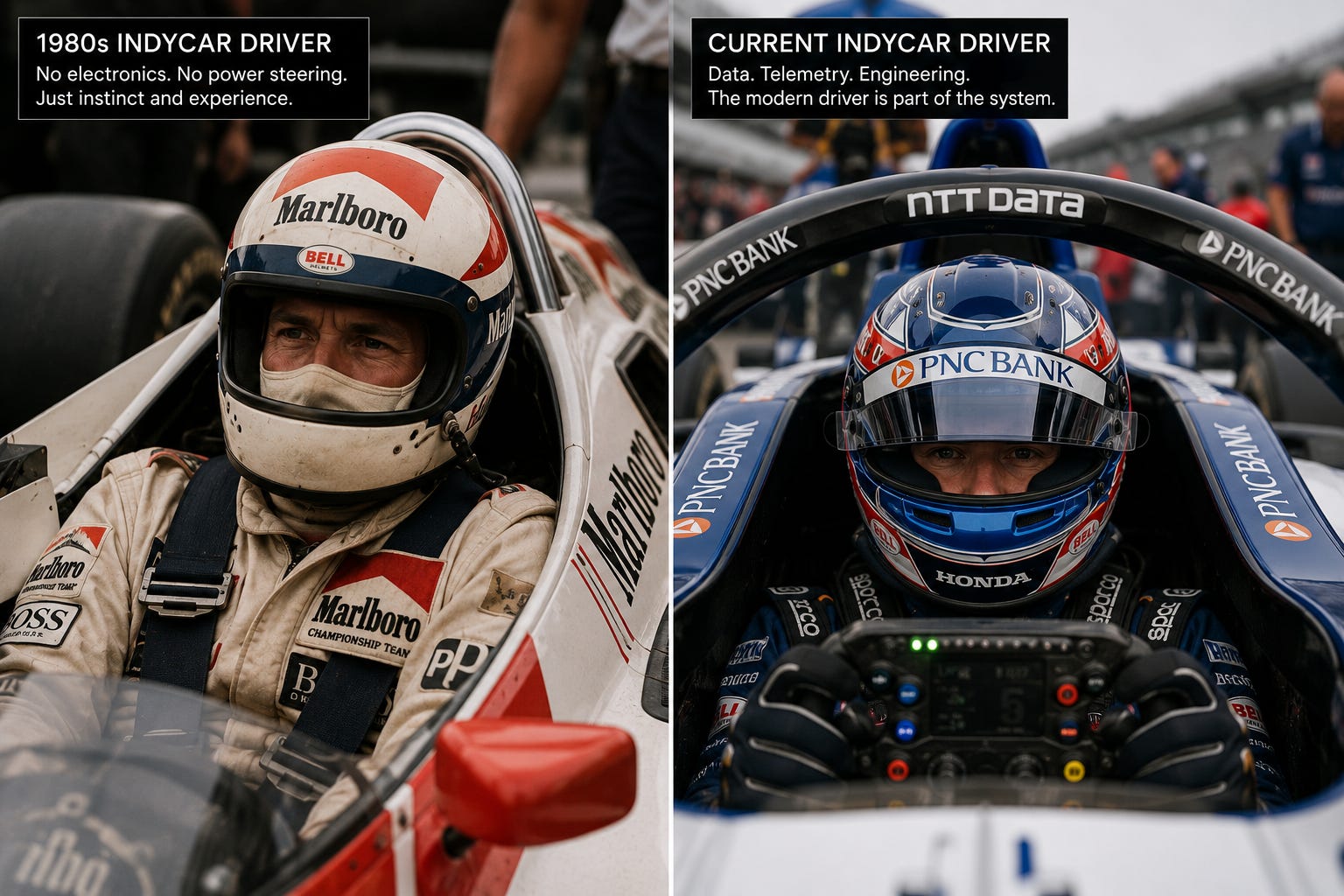
Which brings us to a question that tends to sit just beneath the surface:
What exactly is the role of the driver now? It’s not a question of talent. Today’s drivers are extraordinary.
But the nature of the job has shifted.
There was a time when the driver was responsible for managing variables the car couldn’t handle on its own. Now, many of those variables are managed elsewhere.
The driver is still essential — But no longer alone in the equation.
The modern driver doesn’t fight the machine. He perfects it.
What We Gained
Modern IndyCar racing has gained a great deal.
The competition is tighter. The margins are smaller. The execution cleaner.
And safety—again—is not something to gloss over.
The sport is better for it.
What We Lost (Even If We Don’t Say It)
And still… something changed.
Not in speed, but in feeling.
There was a time when the cars had personalities. Now, much of that has been refined. Smoothed out.
The sport hasn’t lost its edge — but it has changed its texture.
Somewhere in the Middle
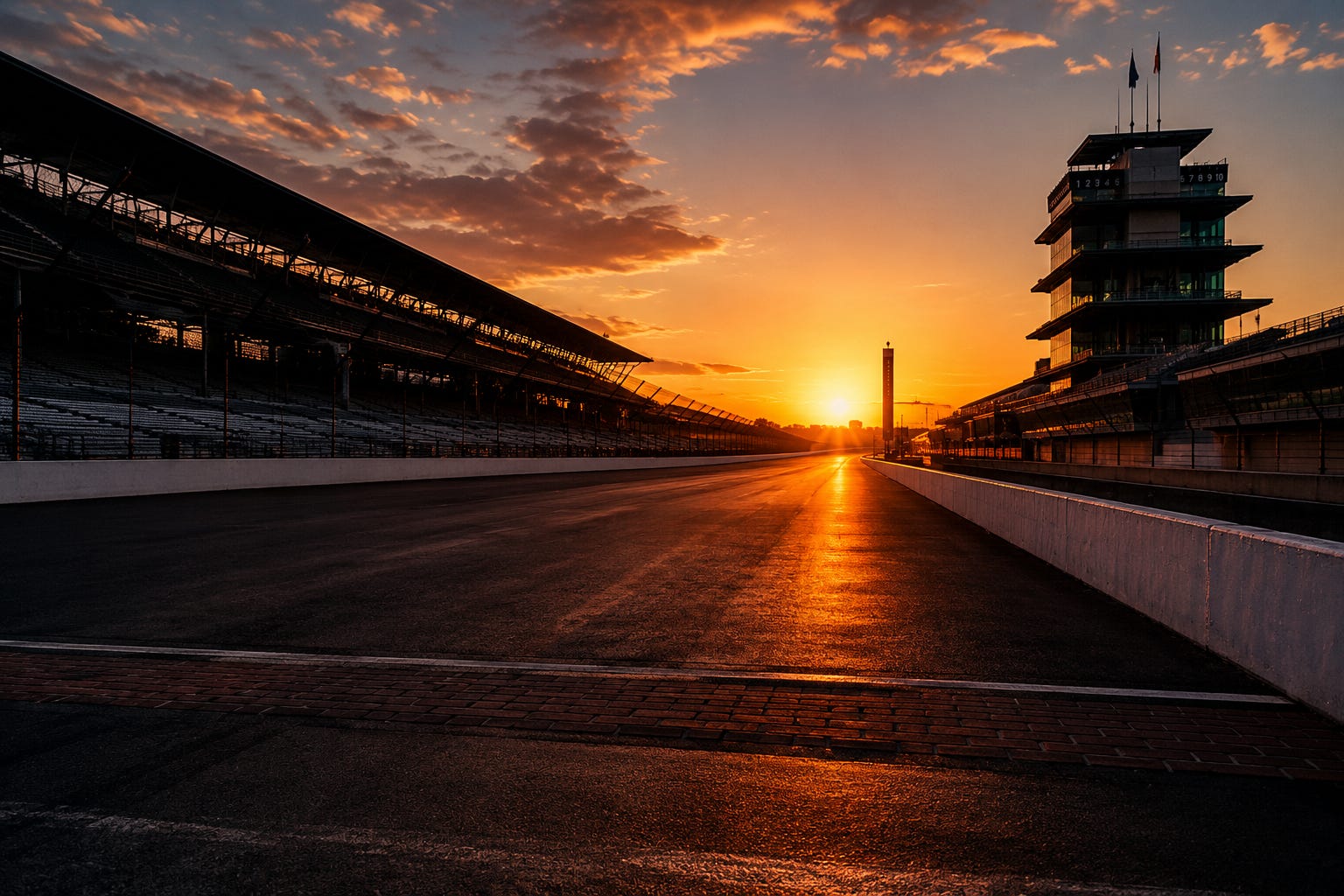
Maybe this isn’t about deciding which era was better.
Maybe it’s about understanding what each era represents.
The analog years were about instinct.
Today’s era is about precision.
Both demand greatness.
The Grand Touring Journal